
There’s a conversation almost every couple I meet has been quietly avoiding. It isn’t about how much you have, or when you’ll retire. It’s the one nobody wants to start over dinner: what happens to the one of us who’s left?
It’s uncomfortable for obvious reasons, so it gets pushed down the road, again and again — until one day it isn’t a conversation anymore. It’s a crisis.
Here’s why it can’t wait. I’ll say it plainly, because avoiding it is exactly what does the damage.
The money changes overnight
When one spouse passes, one of the two Social Security checks stops. But the income doesn’t drop nearly as much as the tax brackets do — the survivor now files as single, on brackets cut roughly in half, often on close to the same income. It’s called the widow’s penalty, and for many couples it’s the single most expensive thing in the entire plan. It is either planned for in advance, while both of you are here to plan it, or it can’t be fixed at all.
And the harder part the spreadsheets miss
The person who didn’t handle the money usually becomes the one who has to handle all of it — suddenly, alone, grieving, at the precise moment they have the least capacity to learn a system they were never part of.
I know this one from my own family. My father ran everything; my mother, more than capable, would never want to run it the way he does — and she should never be handed it cold. When I built their plan, protecting her was as much about making it something she could actually stand on as it was about the taxes. That is where most couples are, whether they’ve said it out loud or not.
None of this is morbid — and all of it is fixable
Here’s the part that should bring the temperature down: every piece of this is plannable, but only in advance. The survivor’s income can be protected. The tax jump can be softened years ahead of time. And the plan can be built so the spouse who “doesn’t do the money” is never left with a full-time job they never applied for, on the worst day of their life.
That’s not a financial exercise. It’s one of the most loving things two people can do for each other — making sure that when one of you is gone, the other is handed security instead of a crisis, a plan instead of a pile.
Why both of you belong in the room
It’s also why we ask both spouses to be there — and mean it, even when one of you would honestly rather be anywhere else. A plan only one of you understands isn’t finished. We read your whole picture against the seven risks, this one included, and show you exactly where the survivor would stand. If you’re already well protected, we’ll tell you so, plainly.
Have it now, while it’s still a conversation
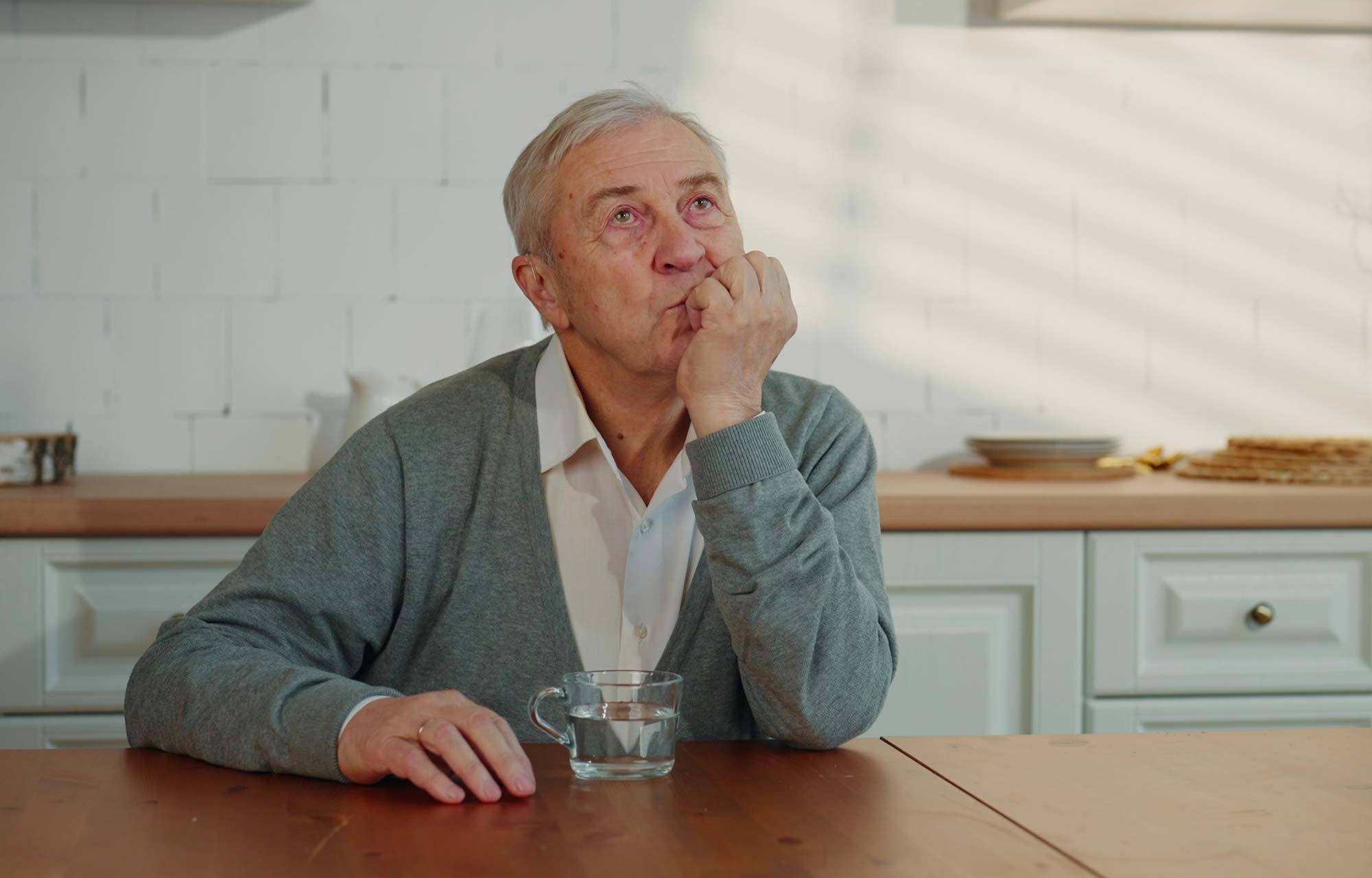
If you’ve been avoiding this, you don’t have to have it alone at the kitchen table. That’s what a Retirement Second Opinion is for — a calm, plain-English reading, both of you in the room, no pitch. You’ll leave knowing the person you love most is protected, no matter who’s left.
Have the conversation now, while it’s a conversation. Later, it becomes a crisis. You can spare each other that.
Book Your Retirement Second Opinion
Educational only — not investment, tax, or legal advice, and not a recommendation of any specific product or strategy. Tax mechanics are general and illustrative; confirm your situation with a qualified tax professional. Annuity and insurance guarantees are subject to the claims-paying ability of the issuing carrier; not FDIC insured. Securities offered through The Quantum Group, member FINRA/SIPC. Investment advisory services offered through Summit Global Investments, a Registered Investment Adviser. Insurance products offered through Summit Income Planning Group. Separate and unaffiliated entities.